
Getting enough iron
How to meet your iron needs on a plant-based diet — naturally and without stress.
NUTRITION & HEALTH
1/18/20267 min read
Iron is often a hot topic — especially if you eat vegetarian or vegan. After all, meat is known for its high iron content, and that’s true.
But can you really absorb enough iron from plant foods?
Is iron from meat absorbed much better?
And do vegetarians and vegans experience iron deficiency far more often?
You may be surprised to learn that when it comes to iron, “more is better” isn’t necessarily true — and that the type of iron (and the source it comes from) can make a big difference for your health.
But let’s start from the beginning.
What Does Iron Do in the Body?
Iron’s main job is transporting oxygen. It’s found in red blood cells, where it binds oxygen and carries it to every cell in the body.
And since nothing works without oxygen — it’s like the spark that keeps everything running — iron deficiency often makes you feel tired, weak, and drained.
Do Vegans and Vegetarians Have Iron Deficiency More Often?
Many people assume that plant-based eaters are more prone to iron deficiency — but studies show they are not more likely to suffer from iron-deficiency anemia than others.¹ ²
In fact, people who eat no meat often consume slightly more iron overall through their diet.³
How can that be if the “number one iron source” is missing?
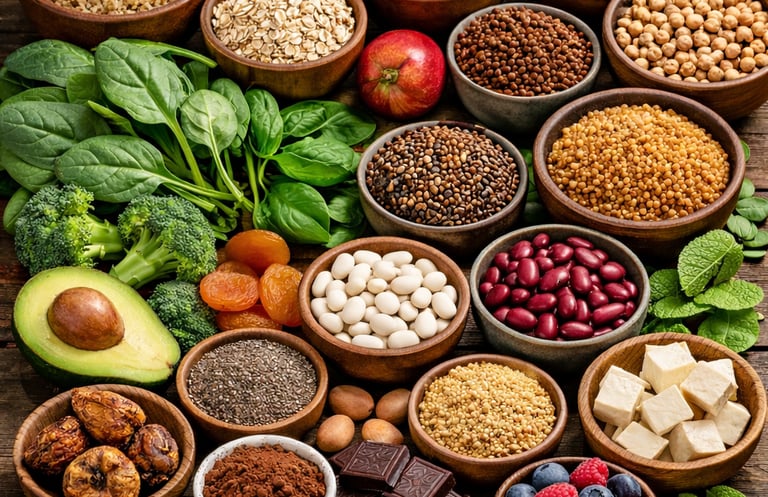
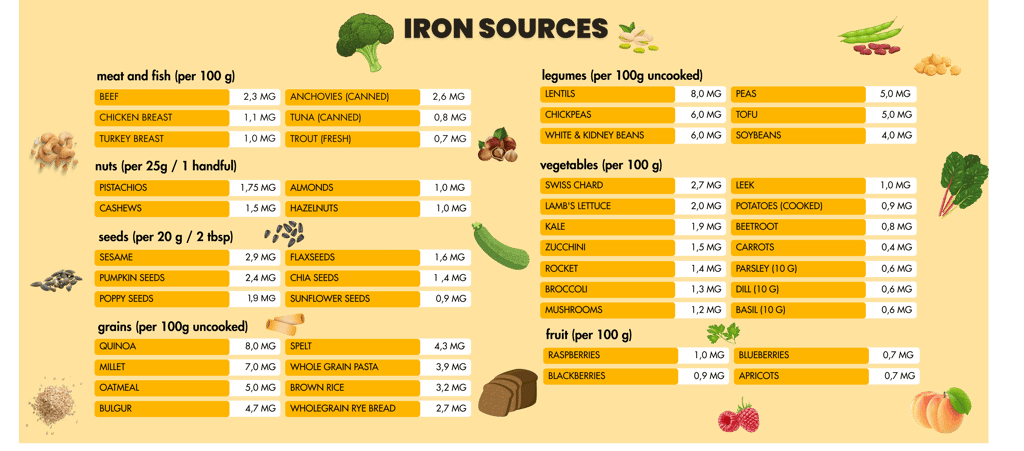
Because iron is found in many foods — including a wide variety of plant foods.

How Much Iron Do We Need?
Recommended intake is roughly:
10 mg per day for men
15 mg per day for menstruating women
But we’ll soon see why it doesn’t make much sense to calculate your daily iron intake down to the milligram.
There are many factors that influence absorption. And you simply can’t know exactly how much iron was in that serving of nuts or chickpeas you ate today — nor how much of that iron your body actually absorbed.
So think of iron values in foods as a rough guideline — mainly to understand which foods are good sources.
The Big Question: Absorption
It’s one thing for a food to contain iron — but if your body can’t absorb it, that doesn’t help much.
There are two types of dietary iron:
Heme iron
Non-heme iron
Meat contains both types, while plants contain only non-heme iron.
Non-heme iron is known to be absorbed less easily than heme iron from meat.
So does a whole-food plant-based diet provide plenty of iron, but too little absorption?
The answer is: it depends.
Iron absorption depends heavily on what else is present in the meal.
Some foods and compounds increase non-heme iron absorption, while others inhibit it.
If you struggle with iron status, it’s especially useful to know these factors.
How to Improve Iron Absorption
Combine iron-rich foods with vitamin C
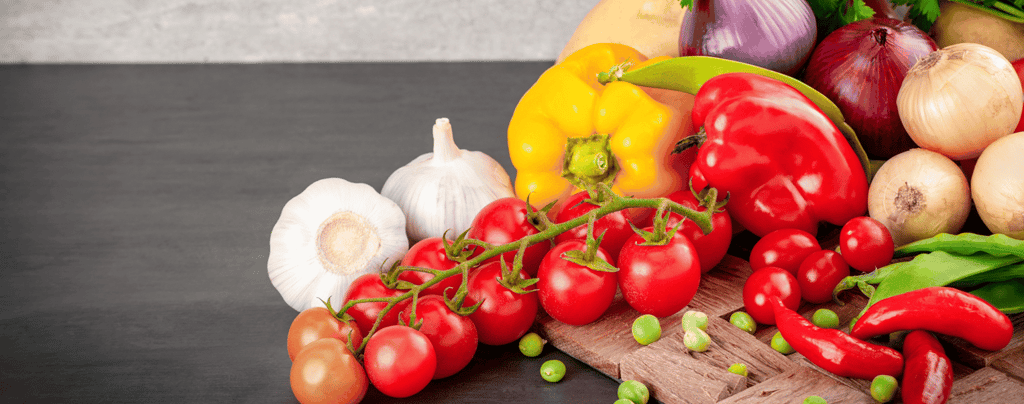
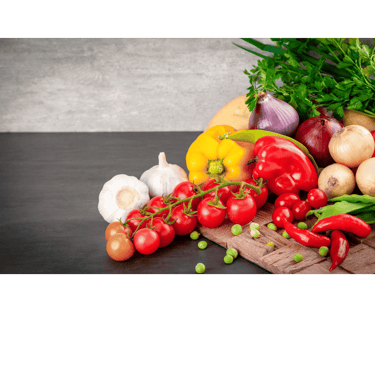
A well-known way to improve iron absorption is eating iron-rich foods together with vitamin C–rich foods (such as citrus fruit, berries, leafy greens, bell peppers, cabbage family vegetables, etc.).
Vitamin C helps counteract the effects of phytic acid — a compound found in many plant foods like grains, nuts, and legumes that can inhibit iron absorption.⁶ ⁷
That means:
berries or an orange with your oatmeal
bell pepper alongside whole-grain bread
a fresh salad (especially with lemon juice in the dressing) served with your meal
…can significantly improve iron absorption.
One study shows how powerful this effect can be: Indian children with iron deficiency received 100 mg vitamin C with lunch and 100 mg with dinner daily for two months. Their meals stayed vegetarian, and they didn’t receive iron supplements — yet most children recovered from their deficiency through this change alone.⁸
Ideally, you consume vitamin C with the meal, but even eating it within 1–2 hours after a meal can still help.⁹
Onions and garlic
Other compounds can also improve absorption.
In studies:
adding onion to a grain-based meal increased iron absorption by 66%
adding garlic to a bean meal increased absorption by up to 73%¹⁰
Beta-carotene
Beta-carotene (found in carrots, sweet potatoes, spinach, kale, apricots, and more) can also significantly improve iron absorption.¹¹
What Inhibits Iron Absorption?
Tea, coffee, herbal tea, cocoa
Beverages like tea and coffee — and even herbal teas such as peppermint or chamomile — as well as cocoa, contain compounds that can inhibit iron absorption by 26% to 99%, depending on brewing time, brand, and strength.¹²
If iron status is an issue for you, it can make sense to consume these drinks at least one hour before or two hours after a meal.
Vitamin C can help reduce this inhibitory effect as well (for example: lemon in tea, or vitamin C–rich fruit/vegetables with the meal).
Phytic acid in plant foods
Phytic acid (found in whole grains, nuts, seeds, and legumes) can also inhibit absorption — but you can reduce it with simple kitchen methods:
soaking
sprouting
fermenting
heating/cooking
These methods are especially effective in combination.
For example:
soak legumes for a few hours or overnight before cooking
soak whole grains and nuts in advance
choose sourdough whole-grain bread (fermentation improves mineral availability)
So Is Plant-Based Iron Enough?
Yes — if your diet is varied and includes plenty of whole, iron-rich foods (whole grains, legumes, nuts and seeds, leafy greens) and you know a few simple strategies, it’s not difficult to absorb more than enough iron even on a plant-based diet.
Other Factors That Affect Iron Status
There are additional factors that can impair absorption and iron status, including:
medications such as aspirin (ASA), acid blockers, cholesterol-lowering drugs, and calcium supplements
conditions such as chronic gastrointestinal disorders
In people who do not menstruate, the most common causes of iron deficiency and iron-deficiency anemia are gastrointestinal issues — either due to reduced absorption or increased iron loss through bleeding.¹³
The Body Can Adjust Iron Absorption
On average, the body absorbs about 15–18% of the iron in an omnivorous diet.¹⁴
But the body can also adapt iron absorption based on need:
when iron stores are low, absorption increases
when iron stores are full, absorption decreases¹⁵ ¹⁶
One study found the difference can be substantial: participants with the highest iron stores absorbed only about 10% of non-heme iron, while those with the lowest stores absorbed up to 34%.¹⁷
So for people with low iron stores, plant iron can be absorbed almost as well as iron from meat.¹⁸
Pregnancy
During pregnancy, absorption increases as well because iron requirements rise.
In one study, average absorption toward the end of pregnancy was 59%, and in women with iron deficiency it exceeded 70%.¹⁹

Too Much Iron: The Overlooked Problem
So far we’ve focused on low iron — but an important part of the iron topic is also the risk of too much.
For health, it may actually be better not to absorb excessive iron. Everyone needs enough — but too much can have negative consequences.
This may be one reason why vegetarians and vegans tend to have better overall health.
The human body has no active mechanism to excrete excess iron. That’s why evolution shaped us to regulate iron absorption tightly.
When stores are low, the gut increases absorption. When stores are high, the gut blocks absorption.
But this regulation works mainly for the most common iron source in human diets: non-heme iron from plant foods.
For heme iron from meat, our digestive system cannot regulate absorption in the same way. Heme iron can pass through the gut barrier more easily — even when the body already has plenty of iron.²⁰
Why Can Too Much Iron Be Harmful?
Iron intake from meat is associated with a significantly higher risk of heart disease — likely because iron acts as a pro-oxidant and may contribute to atherosclerosis by oxidizing cholesterol through free radicals.²¹
Similar associations have been found for stroke risk.
Heme iron intake (from meat), but not non-heme iron intake (from plants), is linked to increased risk of:
stroke
diabetes
cancer²² ²³ ²⁴ ²⁵ ²⁶ ²⁶a
One study where participants regularly had blood removed to lower ferritin (iron stores) found impressive results:
Cancer incidence decreased by 37%, and among those who developed cancer, the risk of death was significantly lower.²⁷
This also fits with the sharp increase in cancer rates observed within just six months after blood transfusions — suggesting that the influx of iron may accelerate the growth of hidden tumors.²⁸
Considering the leading causes of death — heart disease, cancer, and diabetes — the healthiest iron source appears to be non-heme iron, naturally found in abundance in:
whole grains
legumes
dark leafy greens
dried fruit
nuts and seeds
Supplements
Because too much iron can have serious health consequences, current recommendations increasingly suggest that only people with a confirmed diagnosis of iron-deficiency anemia — and in consultation with a doctor — should supplement iron.
Often, dietary changes are enough to restore normal iron status:
eat iron-rich plant foods
combine them with absorption enhancers (vitamin C, onions/garlic, beta-carotene)
avoid inhibitors like tea/coffee during iron-rich meals
It’s also important to clarify whether medications or health conditions reduce absorption — or whether blood loss (for example, heavy menstrual bleeding or gastrointestinal bleeding) is contributing to low iron levels.
What about pregnancy supplements?
Many prenatal products contain iron.
But if a pregnant person has no diagnosed iron deficiency, is extra iron “just to be safe” a good idea?
Unfortunately, it may do more harm than good.
Even pregnant women without anemia should not take iron supplements.²⁹
Supplementation can increase the risk of low birth weight, premature birth, and high blood pressure in the mother.³⁰
Conclusion
The debate around iron — especially in vegetarian and vegan diets — is full of myths and misunderstandings. But the scientific evidence is clear: a plant-based diet can not only meet iron requirements, it may even provide a healthier form of iron associated with lower risk of many diseases.
Yes, meat is a well-known iron source, and heme iron is absorbed more easily. But that’s only part of the story.
Nature provides a wide range of plant-based iron sources — and with simple strategies, their absorption can be optimized:
combine iron-rich foods with vitamin C
soak, sprout, or ferment plant foods
avoid inhibitors such as tea and coffee around meals
And when we consider the potential health risks of excessive iron intake, it becomes clear that sometimes less is more.
The key message for anyone who wants to optimize their diet and iron status is this:
A whole-food, varied plant-based diet is not only sufficient to meet iron needs — it may also be a path to a healthier life.
References for further reading:
1 Iron and vegetarians
2 Position of American Dietetic Association
3 Vegetarian dietary pattern
4 FoodData Central
5 Nutrition Calculator
6 Iron Deficiency
7 Phytic acid
8 Anaemic preschool kids
9 Vitamin C and iron
10 Higher Bioaccessibility
11 Beta-Carotene and iron
12 Iron absorption in man
13 Guide to diagnosis of iron deficiency
14 Guidelines Iron
15 Iron bioavailability
16 Iron status and absorption
17 Pregnant woman
18 Vegetarian diets
19 Erythrocyte Incorporation
20 Regulation iron absorption
21 Iron stores
22 Heme iron and stroke
23 Iron and diabetes
24 Iron and cancer
25 Iron, meat and health
26 Meat and diabetes
26a Reduced risk metabolic syndrome
27 Cancer and iron
28 Blood transfusion and cancer
29 Pregnant woman and supplements
30 Iron absorption in pregnancy
Want to go deeper?
If you’d like to learn how to integrate these principles step by step into your everyday life — without diets or complicated plans — you’ll find more resources here on the blog and in my free ebook and online course.
Stay in touch
Questions or thoughts?
I'd love to hear from you.
© 2026 Eat Healthy with Johanna
info@eatwellwithjohanna.com