
How a Whole Food Plant Based Diet Can Help You Lose Weight - Naturally
Why weight loss becomes easier when you focus on simple, whole plant foods instead of rules and restriction.
NUTRITION & HEALTH
4/4/20263 min read
Most people think weight loss means control.
Tracking calories.
Cutting carbs.
Avoiding certain foods.
And for a while, that might even work.
But sooner or later, it becomes exhausting.
Because the real challenge isn’t losing weight — it’s maintaining it without constantly overthinking food.
That’s where a whole-food, plant-based approach is different.
Not because it’s restrictive.
But because it changes how your body naturally regulates hunger, fullness, and energy intake.
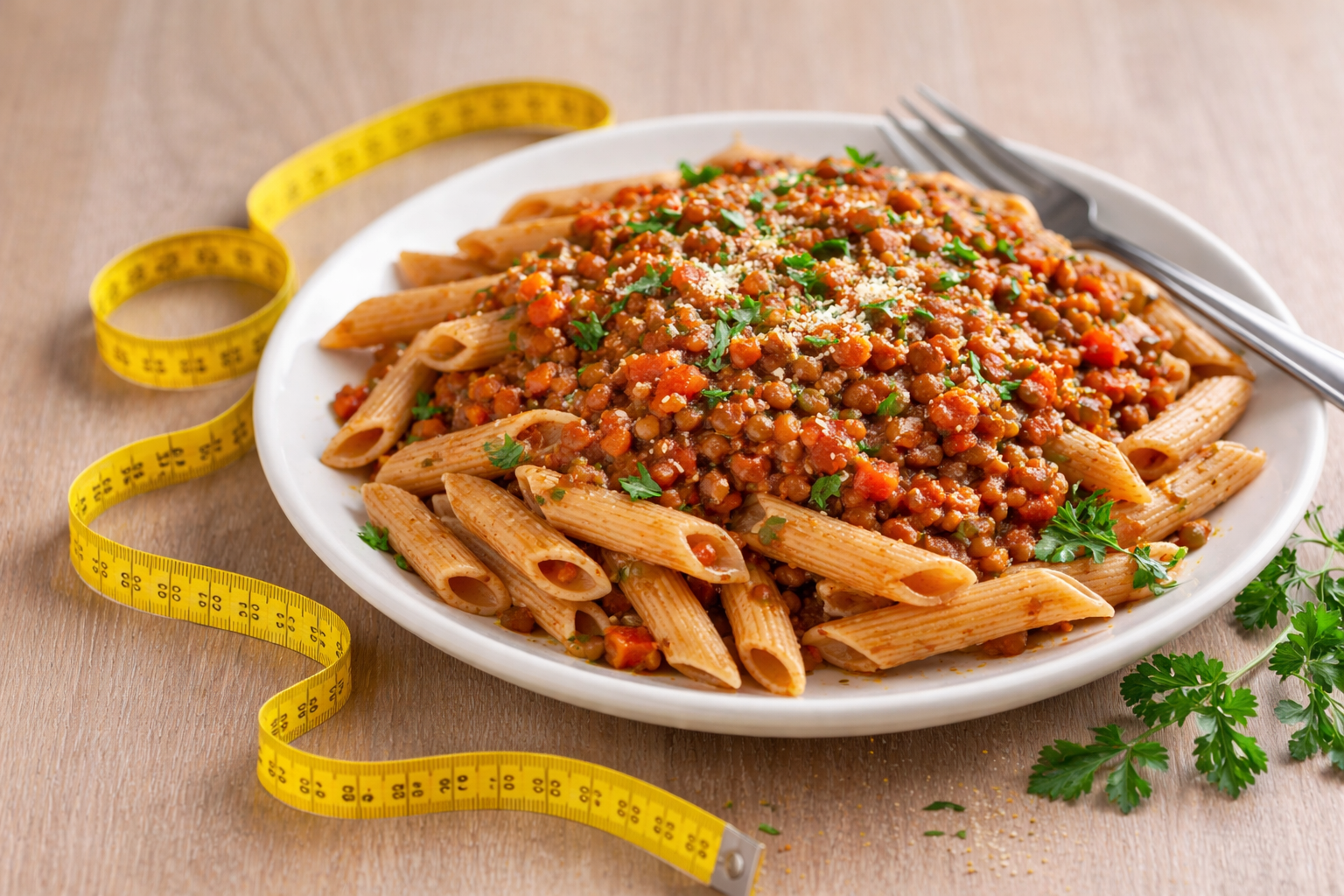
What “whole-food, plant-based” actually means
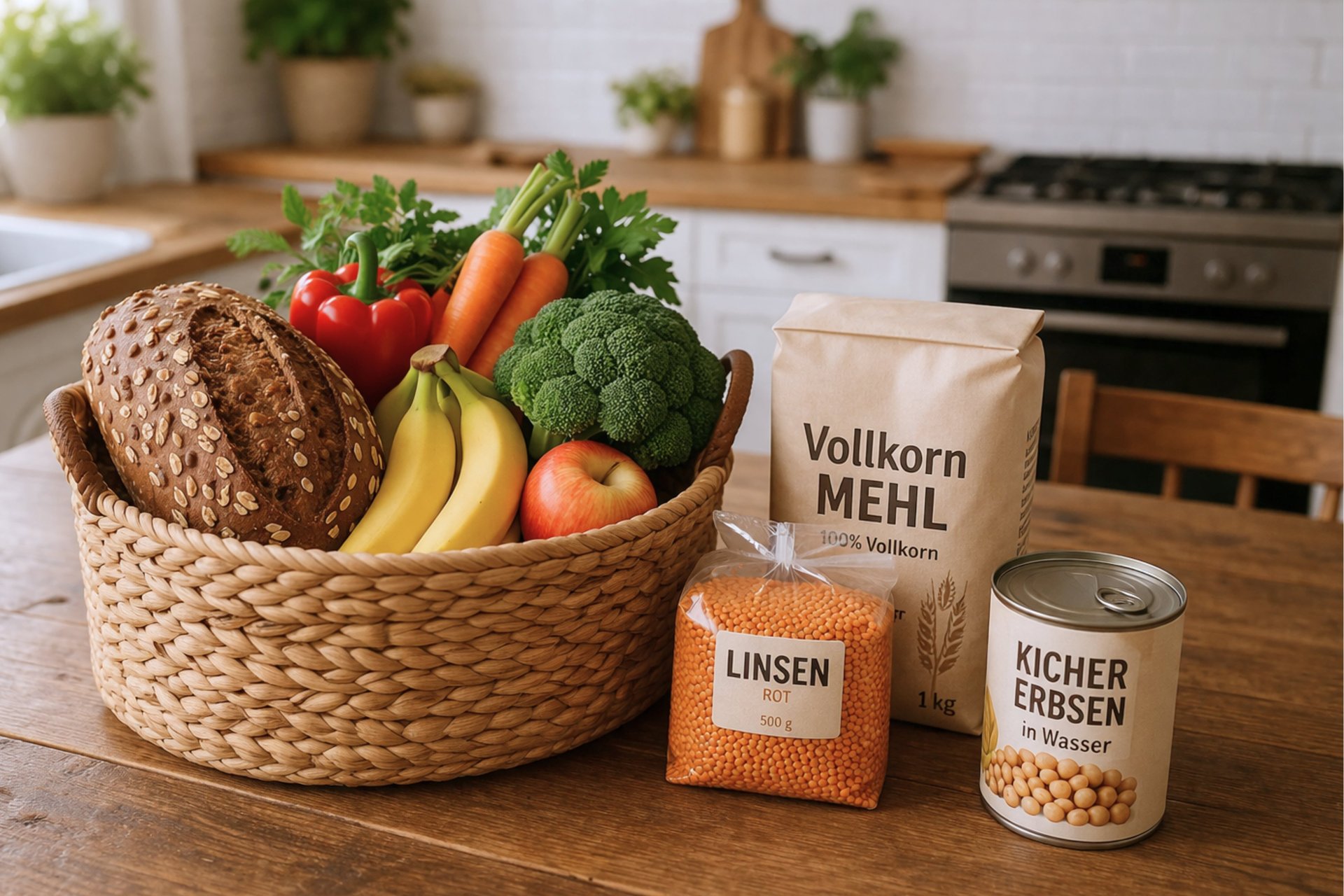
A whole-food, plant-based (WFPB) diet focuses on:
Vegetables
Fruits
Whole grains
Legumes (beans, lentils, chickpeas)
Nuts and seeds
And minimizes:
Highly processed foods
Refined sugars
Oils
Animal products
It’s not about perfection.
It’s about building meals from real, simple foods.
Why this approach naturally supports weight loss
1. You eat fewer calories — without trying
One of the main reasons a whole-food, plant-based approach supports weight loss is something called calorie density.
Some foods contain a lot of calories in a small volume. Others contain fewer calories but take up much more space on your plate. And this makes a bigger difference than most people realize.
A simple example
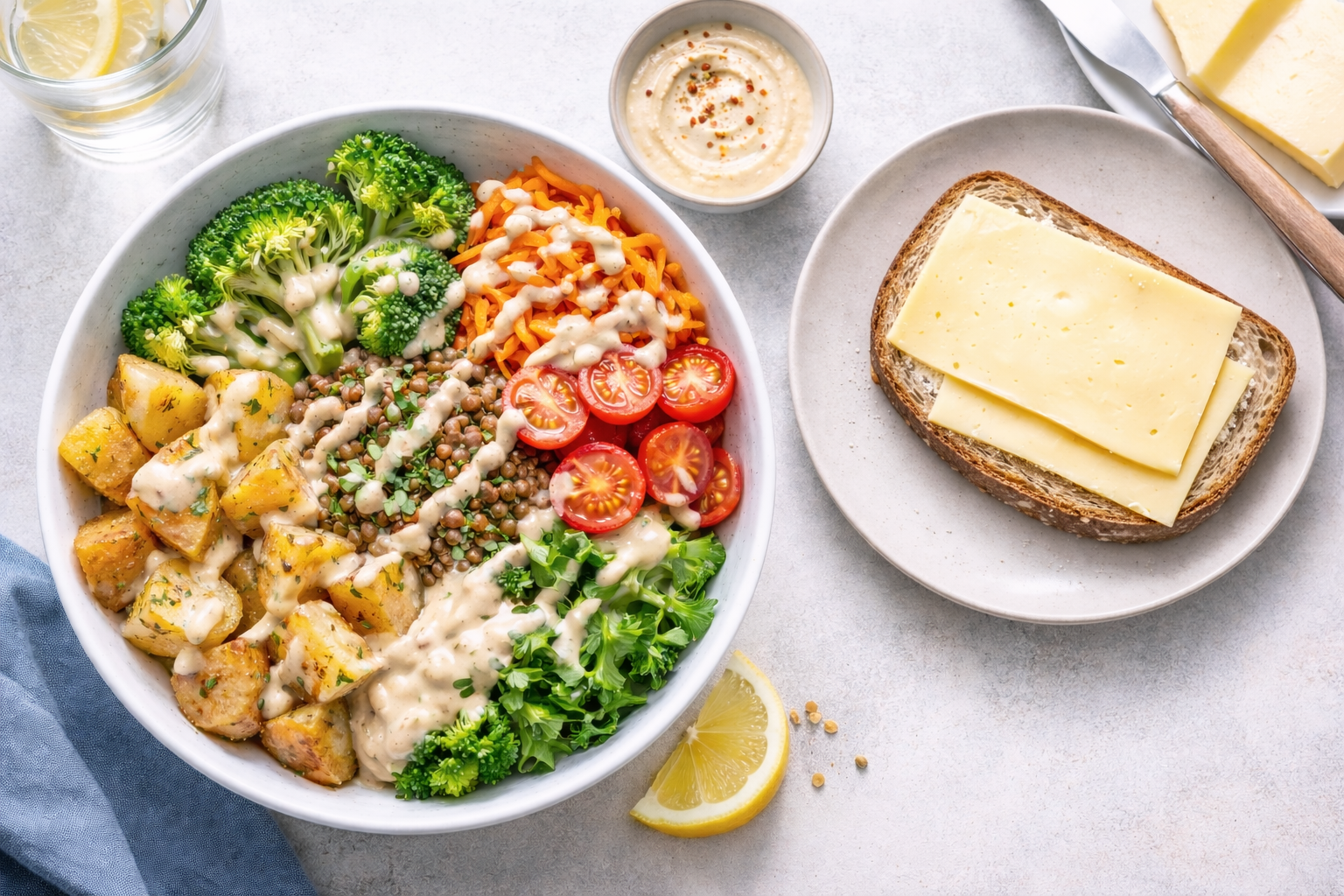
Let’s say you eat around 500 calories in one meal.
That could look like:
– a relatively small portion of bread with butter and cheese
or:
– a large plate of potatoes, vegetables, and lentils
Even though the calories may be similar, these meals feel completely different in your body.
One is easy to overeat and leaves you still a bit unsatisfied. The other feels filling, balanced, and naturally satisfying.
If we look at it more closely:
– 100g of cheese can easily contain around 400 calories
– while 100g of potatoes has around 70–80 calories
This means you can eat a much larger, more satisfying portion when your meals are based on whole plant foods.
2. You feel full and satisfied
Whole plant foods are rich in:
Fiber
Water
Complex carbohydrates
This combination slows digestion and helps regulate appetite.
👉 You stay full longer
👉 Cravings become less intense
👉 Snacking becomes less necessary
This is one of the biggest differences compared to typical diets.
More real-life examples
Breakfast
Let’s take a simple breakfast.
You could have:
– a small bowl of sugary cereal with plant milk
– maybe topped with a bit of fruit
or:
– a large bowl of oats with berries, banana, and some seeds
Even if both meals seem similar at first glance, they affect your hunger very differently.
The cereal is quickly digested, and you might feel hungry again soon after.
The oat-based breakfast, on the other hand, is rich in fiber and volume.
👉 It keeps you full longer
👉 and gives you more stable energy
Snack
The same applies to snacks.
You could have:
– a small handful of cookies or chocolate
or:
– an apple with a few nuts
– or dates with peanut butter
Again, the calories may not be dramatically different.
But:
– one option is easy to eat quickly and doesn’t satisfy you for long
– the other feels more filling and naturally self-limiting
3. You stop the cycle of restriction and cravings
Many weight loss approaches create this pattern:
Restrict → crave → overeat → feel guilty → repeat
A whole-food, plant-based approach breaks that cycle.
Because:
Meals are satisfying
You don't have to go hungry
You don’t rely on willpower
👉 You don’t need to fight your body anymore.
4. You build habits you can actually maintain
Weight loss is not the hard part.
Maintaining it is.
And that only works if your way of eating:
fits into real life
feels enjoyable
doesn’t require constant tracking
Simple meals made from whole foods are:
✔ easy to repeat
✔ flexible
✔ realistic long-term
Do you need to count calories?
Short answer: No.
Long answer:
When your meals are based on whole, plant foods, your body becomes much better at:
regulating hunger
recognizing fullness
maintaining a stable weight
This doesn’t mean calories don’t exist.
But it means you don’t have to obsess over them.
👉 You shift from control → to trust.
What this looks like in real life
Instead of:
tracking every meal
avoiding certain foods
constantly second-guessing your choices
It can look like:
A bowl of oats with fruit and seeds
Potatoes with vegetables and a simple sauce
Rice, beans, and a big salad
👉 Simple meals.
👉 Real food.
👉 No overthinking.
A more sustainable approach to weight
The goal is not to eat perfectly.
The goal is to create a way of eating that:
feels simple
supports your health
works long-term
A whole-food, plant-based approach does exactly that.
Not by forcing weight loss —
but by making it a natural side effect of how you eat.
If you’d like more guidance with this, I’ve put everything together inside my course.
👉 A simple, structured way to make sense of healthy eating — and apply it in your everyday life.
Stay in touch
Questions or thoughts?
I'd love to hear from you.
© 2026 Eat Healthy with Johanna
info@eatwellwithjohanna.com