
What Whole-Food Plant-Based Really Means
A simple, realistic explanation of what whole-food plant-based eating actually means — what it focuses on, what it reduces, and how it fits into real life.
NUTRITION & HEALTH
3/8/20263 min read
Whole-food, plant-based.
Vegan. Clean eating. Healthy eating.
No wonder so many people feel confused.
For some, “plant-based” sounds like a strict diet.
For others, it brings up images of endless salads, rules, or giving up everything they enjoy.
So let’s slow things down and look at what whole-food, plant-based eating (WFPB) actually means in practice — what it focuses on, and what it naturally leaves less room for.
What “whole-food plant-based” means at its core
Whole-food plant-based eating is an approach that centers meals around plant foods in their most natural form.
It’s not about perfection or restriction.
It’s about creating a strong nutritional foundation by choosing foods that support health — most of the time.
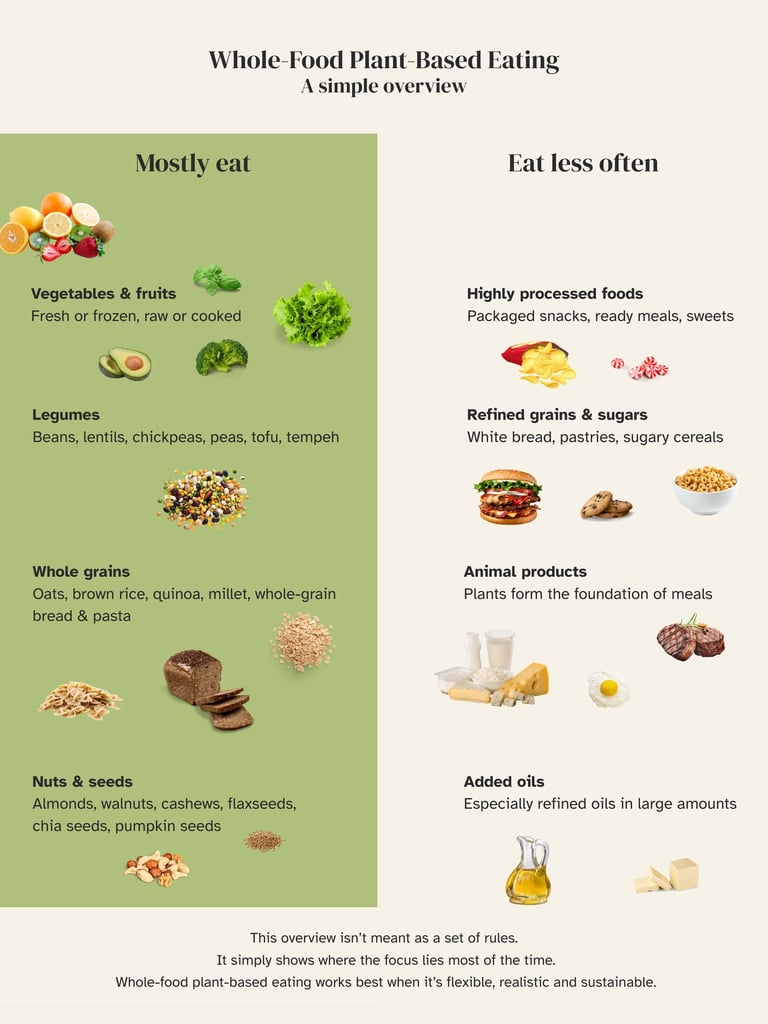
What you mostly eat on a whole-food plant-based diet
Whole-food plant-based eating emphasizes foods that are minimally processed and naturally rich in nutrients.
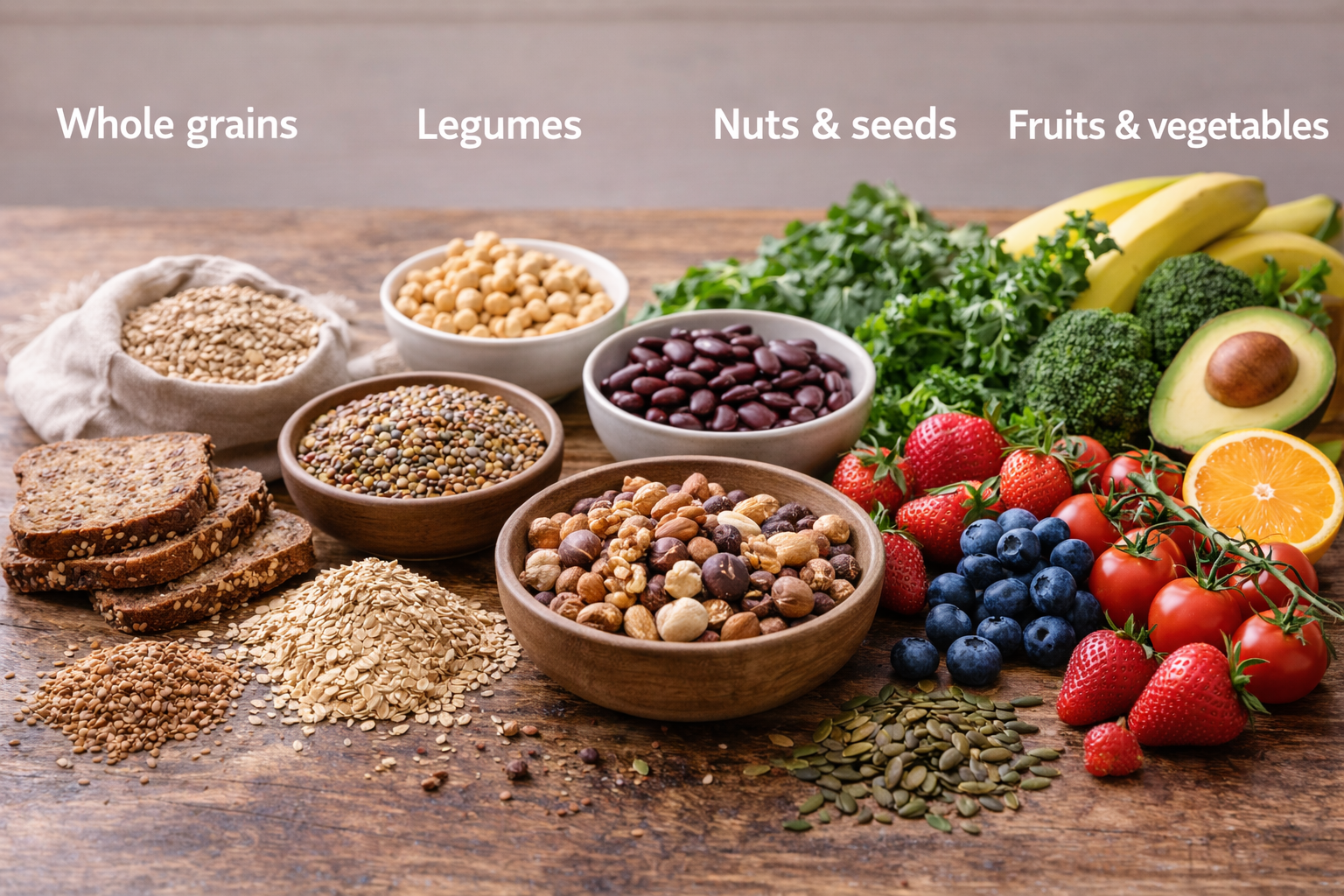
That means meals are mainly built from:
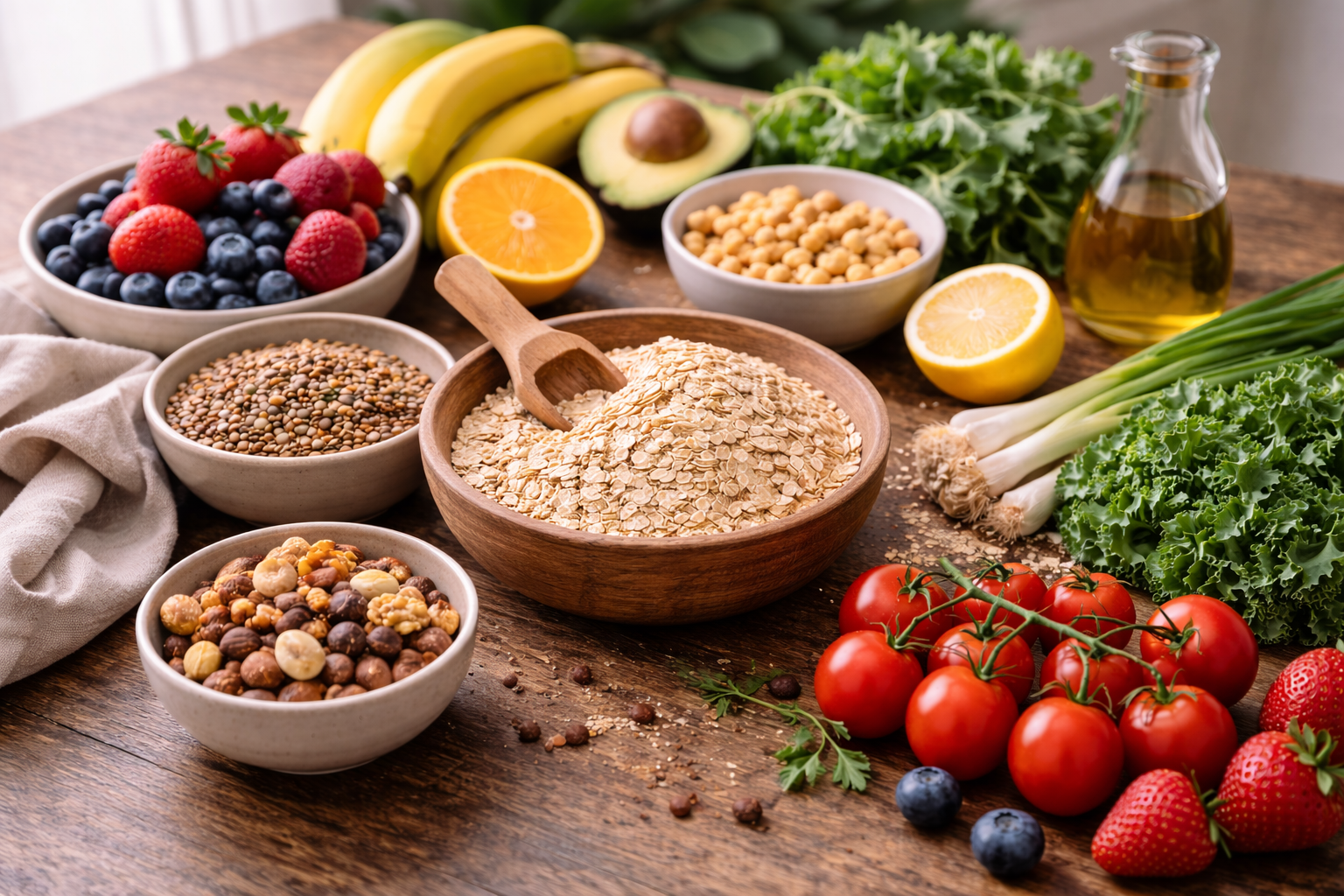
Vegetables & fruits
Fresh or frozen, raw or cooked.
Leafy greens, root vegetables, cruciferous vegetables, berries, apples, bananas — variety matters more than perfection.
Legumes
Beans, lentils, chickpeas, peas, soy foods like tofu or tempeh.
These are key sources of plant protein, fiber and minerals.
Whole grains
Oats, brown rice, quinoa, millet, buckwheat, whole-grain bread or pasta.
They provide energy, fiber and long-lasting satiety.
Nuts & seeds
Almonds, walnuts, cashews, flaxseeds, chia seeds, pumpkin seeds.
Used in realistic amounts for healthy fats, texture and flavor.
Herbs & Spices
Fresh herbs, dried spices, garlic, ginger, turmeric, cinnamon, lemon, vinegar.
Used to add flavor, variety and enjoyment — and to make simple meals feel satisfying.
Meals don’t have to be complicated.
Often it’s about combining a few of these components in a way that feels satisfying and enjoyable.
What is usually reduced — but not forbidden
This is where many misunderstandings arise.
Whole-food plant-based eating doesn’t mean cutting foods out because they’re “bad”.
It simply means they play a smaller role.
Highly processed foods
Packaged snacks, sweets, ready-made meals, refined baked goods.
Not because they can never be eaten — but because they contribute little to long-term nourishment.
Refined sugars & white flours
White bread, pastries, sugary cereals, sweets.
These are often replaced with naturally sweet foods or whole-grain options.
Added oils
Especially refined oils used in large amounts.
Whole-food sources of fat are usually emphasized instead.
Animal product
In a WFPB approach, animal foods are minimized or avoided, with plants forming the foundation of meals.
Some people choose to be fully plant-based.
Others move gradually in that direction.
Both approaches can benefit from a whole-food focus.
What this looks like in everyday life
In real life, whole-food plant-based eating is flexible.
It looks like:
meals that are simple and repeatable
choosing whole foods most of the time
enjoying desserts or treats without guilt
adjusting based on family life, social events and energy levels
There’s no need to eat perfectly for the approach to work.
Consistency over time matters far more than individual choices.
A framework, not a rulebook
Whole-food plant-based eating works best when it’s seen as a framework.
A way to guide decisions — not control them.
A focus on abundance, not restriction.
Some days will be more whole-food than others.
That’s not failure — that’s real life.
If you’re looking for clarity instead of confusion…
Inside my Healthy Eating Master Class, I teach the underlying principles of whole-food plant-based eating —
so you understand why you’re making certain choices, not just what to eat.
It’s about building confidence around food, not following rigid plans.
You can also find simple, whole-food plant-based recipes on the blog —
from nourishing meals to plant-based desserts.
Want to go deeper?
If you’d like to learn how to integrate these principles step by step into your everyday life — without diets or complicated plans — you’ll find more resources here on the blog and in my free ebook and online course.
Stay in touch
Questions or thoughts?
I'd love to hear from you.
© 2026 Eat Healthy with Johanna
info@eatwellwithjohanna.com