
Why Nutrition Advice Feels So Confusing
Nutrition advice today can feel incredibly confusing. In this article we explore why nutrition headlines often seem to contradict each other and how understanding the bigger picture can help us make more confident food choices.
NUTRITION & HEALTH
3/15/20263 min read
If you’ve ever felt confused about nutrition advice, you’re not alone.
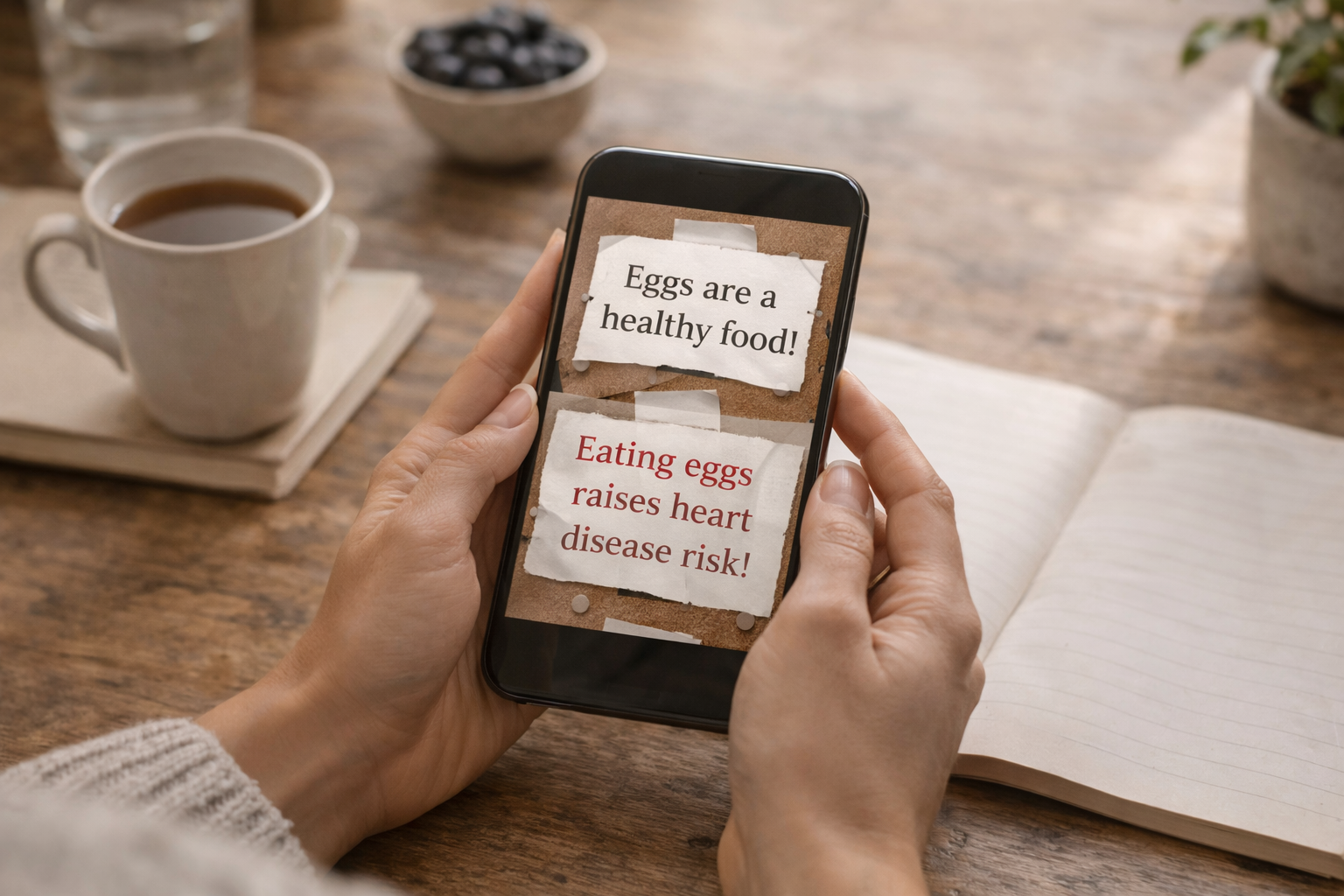
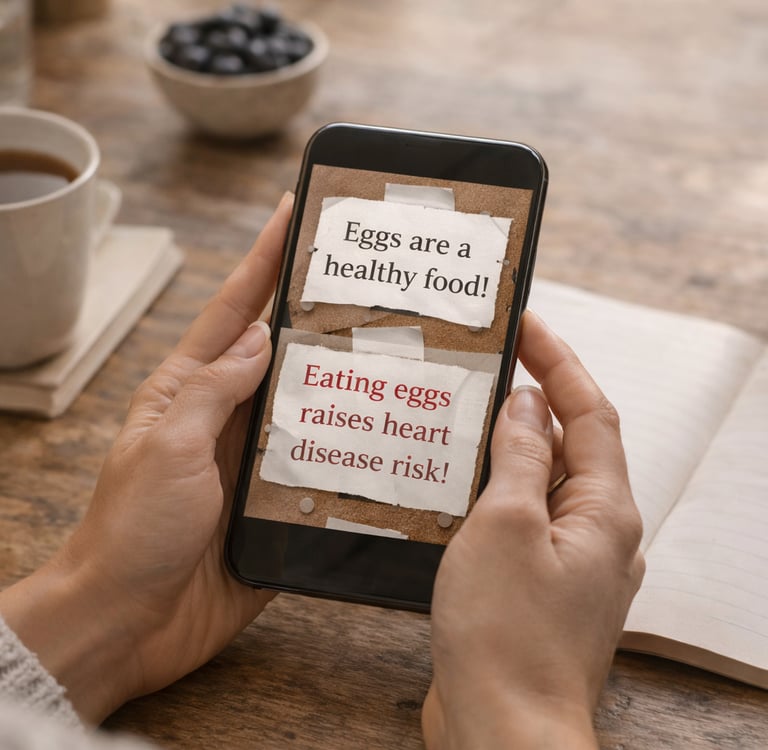
One day eggs are considered a perfect health food.
The next day they are something we should limit.
Carbohydrates are blamed for weight gain — until someone explains that whole grains are actually associated with better health.
Butter was once the villain, then sugar, then seed oils.
With so many headlines, documentaries, podcasts, and influencers discussing nutrition, it can feel as if the science is constantly changing.
But in reality, the core principles of healthy eating have been surprisingly consistent for decades.
So why does nutrition advice feel so confusing?
1. Headlines Often Focus on Single Studies
Nutrition headlines are often based on one new study.
But science rarely works that way.
Individual studies can be interesting, but they rarely tell the full story. What really matters is the overall body of evidence built over many years and many different studies.
Researchers look at patterns across large populations, long-term studies, and controlled trials.
When you zoom out and look at the broader picture, many of the core findings about healthy eating remain remarkably consistent.
2. Nutrients Are Often Discussed Without Context
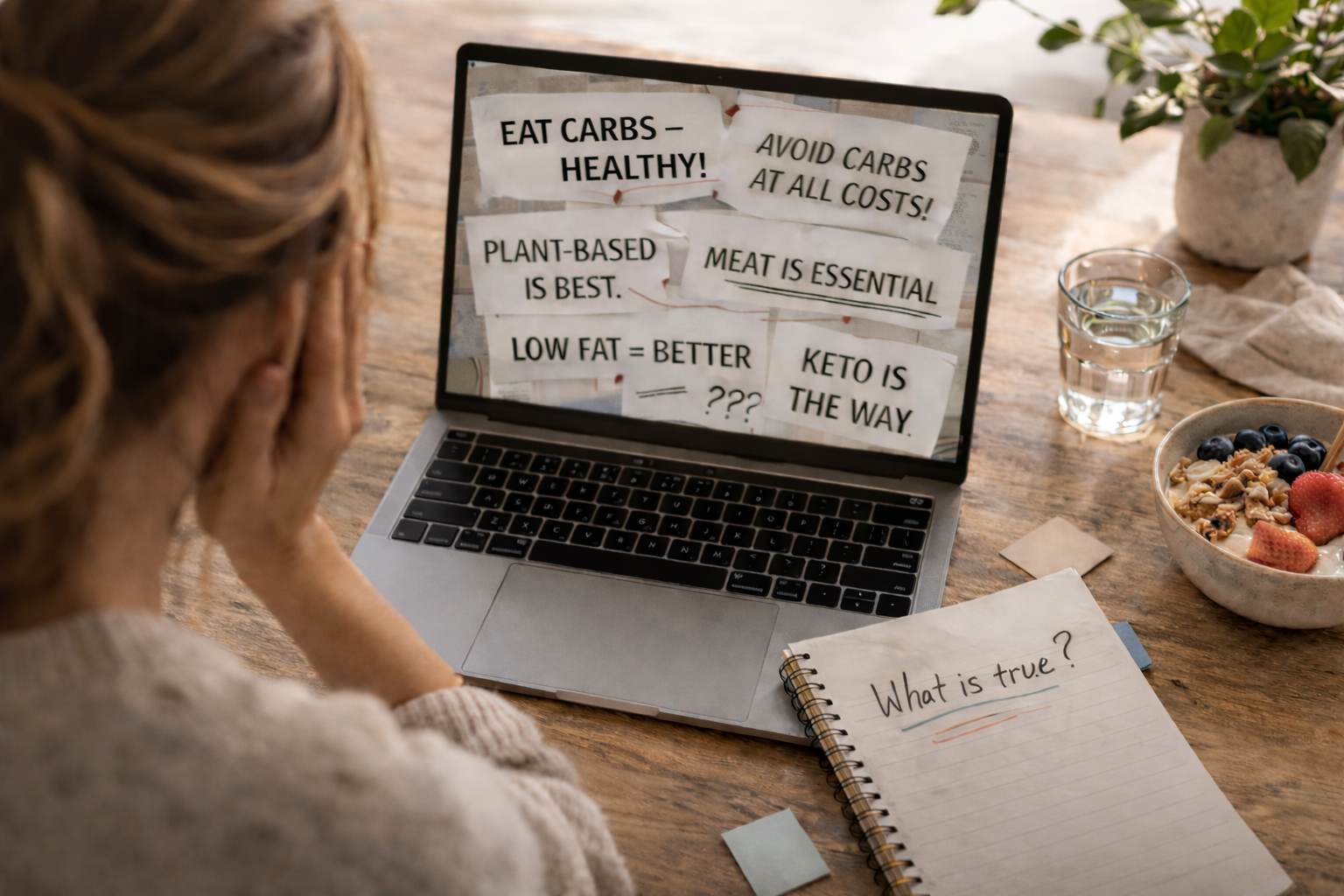
Another reason nutrition advice can feel confusing is the way we talk about individual nutrients.
You might hear things like:
protein is the most important nutrient
carbohydrates should be avoided
fat is the key to health
But the human body doesn’t eat nutrients in isolation. We eat foods and dietary patterns.
A food is not simply a collection of protein, fat, or carbohydrates. It contains thousands of compounds that interact with each other in complex ways.
This is why many nutrition scientists emphasize looking at the whole dietary pattern rather than focusing on single nutrients.

3. Reductionism vs. the Whole Diet
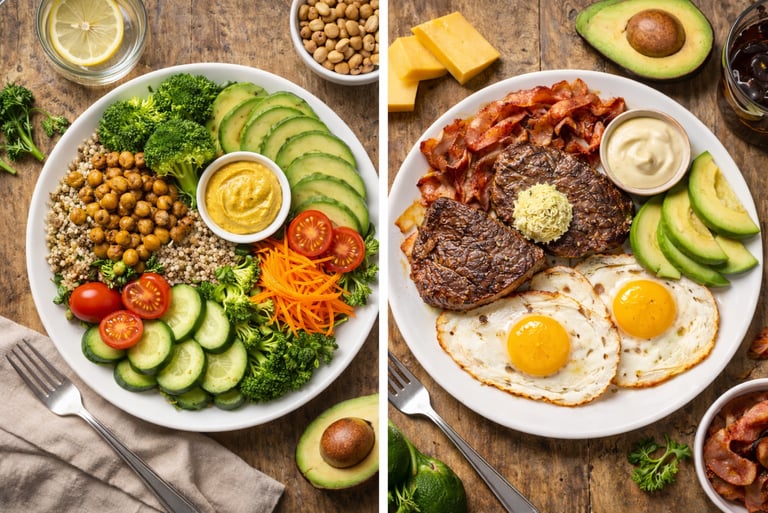
For a long time, nutrition science focused heavily on isolated nutrients.
This approach, sometimes called reductionism, tries to understand food by breaking it down into its smallest components.
But many researchers today argue that health is influenced by how foods work together as part of a larger dietary pattern.
Nutrition researcher T. Colin Campbell discusses this idea in his book WHOLE, emphasizing that the health effects of food often cannot be understood by looking at single nutrients alone.
Instead, it’s the overall dietary pattern that matters most.
4. Media Simplifies Complex Science
Scientific research is often complex and nuanced.
Media headlines, however, need to be short and attention-grabbing.
As a result, research findings are often simplified into statements like:
“Coffee prevents disease”
“Eggs increase risk”
“Carbs cause weight gain”
In reality, the conclusions of most studies are far more nuanced than the headlines suggest.
Without context, it’s easy for readers to come away with the impression that nutrition science constantly contradicts itself.
5. Healthy Eating Is Often Simpler Than It Seems
Despite the confusion in the media, nutrition research across many populations points to similar dietary patterns associated with good long-term health.
These patterns tend to emphasize foods such as:
vegetables
fruits
whole grains
legumes
nuts and seeds
In other words: a pattern centered around mostly whole plant foods.
At the same time, they tend to contain fewer highly processed foods and animal products.
While nutrition science continues to evolve, the big picture of healthy eating has remained remarkably consistent.
Want to go deeper?
If you’d like to learn how to integrate these principles step by step into your everyday life — without diets or complicated plans — you’ll find more resources here on the blog and in my free ebook and online course.
Stay in touch
Questions or thoughts?
I'd love to hear from you.
© 2026 Eat Healthy with Johanna
info@eatwellwithjohanna.com