
The 4 Biggest Myths About Transitioning to a Plant-Based Diet (And What to Do Instead)
Why starting a whole-food plant-based lifestyle is much easier, cheaper, and more satisfying than you've been led to believe.
NUTRITION & HEALTH
7/14/20264 min read
I hear some version of the same four sentences almost every week.
"It sounds amazing for my health, but I just don't know if I can actually pull this off."
And honestly? I get it. When I first started shifting toward whole-food plant-based eating myself, I had the exact same worries running through my head — the hunger, the grocery bill, the "but what about my nutrients," the idea of cooking two separate dinners every night.
So today I want to take the four biggest myths I hear again and again, and gently take them apart — not with willpower or hype, but with a bit of science and a lot of real-life practicality.
You are not alone in these worries. But most of what's holding you back is simply a myth.
Myth #1: "Eating plant-based is way too expensive"
It's easy to see why people think this. If you walk into a supermarket and fill your cart with trendy processed vegan meat alternatives, gluten-free specialty cookies, and imported superfoods, your receipt will genuinely shock you.
But that's not what whole-food plant-based eating actually looks like.
What to do instead: Go back to the basics. The healthiest foods on the planet are also some of the cheapest:
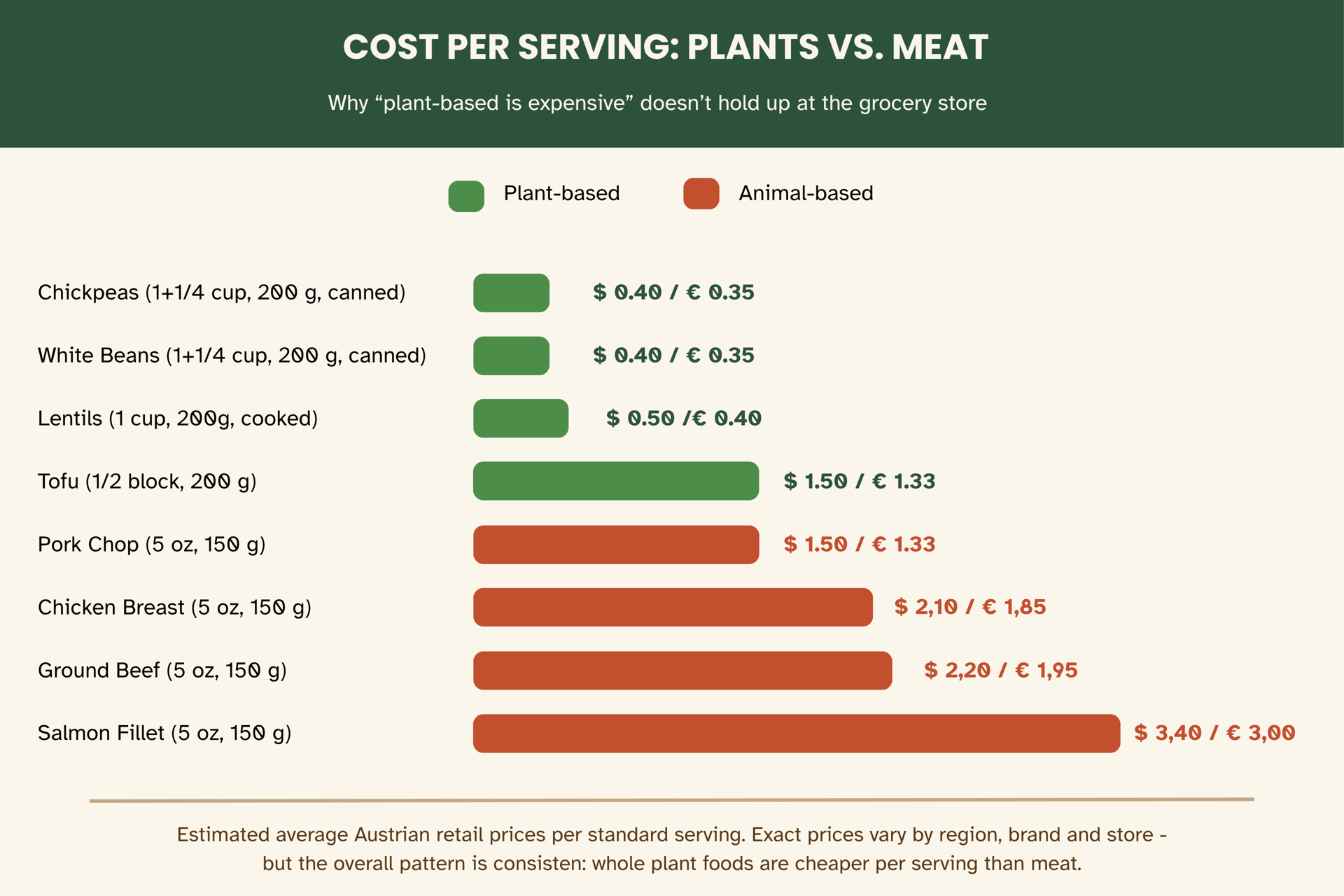
Legumes: Lentils, chickpeas, and black beans cost a fraction of the price of meat per serving and are packed with protein and fiber.
Grains: Brown rice, oats, and whole-wheat pasta are incredibly budget-friendly staples.
Seasonal & frozen produce: Frozen berries and vegetables are frozen at peak ripeness, meaning they retain their nutrients while being cheaper — and lasting longer — than fresh, out-of-season imports.
To put it into perspective: a serving of lentils typically costs a fraction of the same-sized serving of ground beef, and it comes with fiber built in for free.
👉 When you focus on whole plant foods rather than expensive processed replacements, your grocery bill will actually go down, not up.
Myth #2: "I will be hungry all the time"
If your idea of a plant-based meal is simply leaving the chicken off your plate and eating a plain side salad, then yes — you will absolutely be starving an hour later.
This happens because plant foods are naturally lower in calorie density. If you don't adjust your plate accordingly, you won't get enough energy from it.
What to do instead: You don't need to eat less — you actually get to eat more, if you do it right. The secret to staying full is what I like to call the "fullness formula": fiber, complex carbs, and plant protein.
Instead of a light green salad, build a nourishing grain bowl:
Start with a base of quinoa or brown rice (complex carbs for lasting energy)
Add a generous scoop of black beans or lentils (protein and fiber)
Top it with roasted sweet potatoes, fresh veggies, and a tahini or peanut dressing (healthy fats that signal to your brain that you're satisfied)
🌿 A full plate, not a smaller one, is what actually makes this sustainable.
Myth #3: "I will suffer from nutrient deficiencies"
This is probably the concern I hear the most: "Where will I get my protein, iron, and calcium if I stop eating animal products?"
We've been conditioned to believe these nutrients only come from meat and dairy — which leads to the fear that a plant-based diet will leave you weak or malnourished.
What to do instead: Take a breath, and look at what the science actually says. A well-planned, whole-food plant-based diet can easily provide all the essential nutrients your body needs — with one exception: vitamin B12, which is simple and cheap to supplement.
Here's where your body actually gets its fuel:
Protein: You don't need meat for muscles. Lentils, chickpeas, tofu, tempeh, quinoa, and even green vegetables like broccoli are loaded with amino acids — and plant protein comes packaged with fiber and zero cholesterol. (Want to know more? Check out my article Protein on a Plant-Based Diet: Beyond the Numbers.)
Iron: Plant-based (non-heme) iron is abundant in dark leafy greens, pumpkin seeds, lentils, and oats.
Pro tip: pairing these foods with vitamin C — like a squeeze of lemon juice or some bell pepper — can meaningfully improve how much iron your body absorbs. (Read my detailed guide: Getting Enough Iron.)
Calcium: You don't need cow's milk for strong bones. Calcium is highly bioavailable in kale, broccoli, pak choi, tahini, almonds, and calcium-set tofu.
By eating a colorful variety of whole plant foods, you're not restricting your nutrients — you're actually flooding your body with a wide spectrum of health-supporting vitamins and antioxidants.
Myth #4: "I have to cook entirely separate meals for my family"
I know this one personally — as the mom of a wonderfully picky 8-year-old, I used to dread the idea of being a short-order cook every night: one meal for me, another for everyone else. (If you've read my post on Raising a Picky Eater, you know this is close to my heart.)
The good news is, you don't have to choose between "one meal for everyone" and "cooking separately."
What to do instead: Instead of introducing completely unfamiliar dishes, use "transition meals" — familiar favorites that everyone can customize themselves:
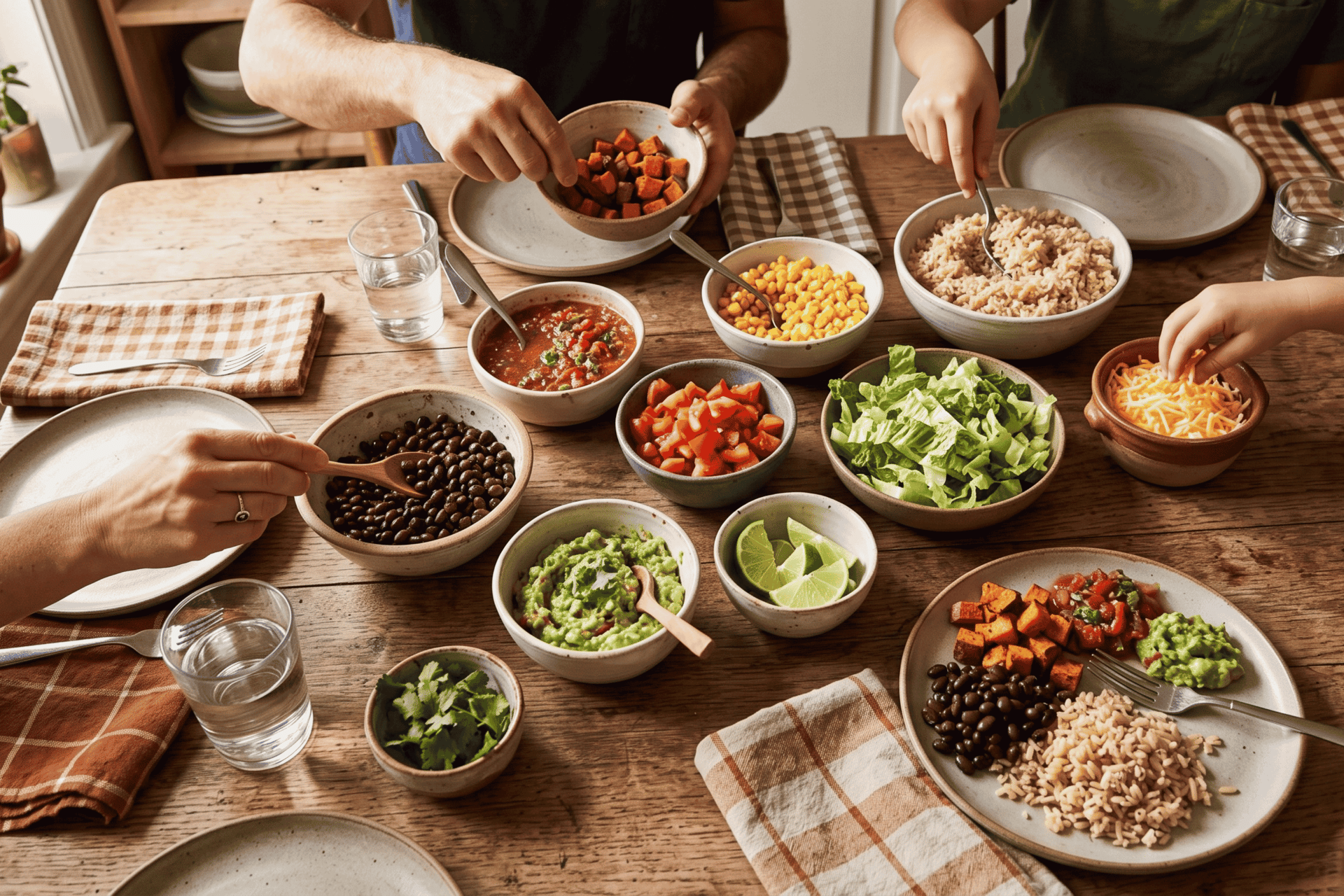
Taco/fajita night: Set out bowls of spiced beans, brown rice, guacamole, salsa, and veggies. Your family can add cheese or meat if they like, while you build a fully plant-based version for yourself. Everyone eats the same meal, just customized.
Pasta night: Make a rich, hearty marinara sauce loaded with red lentils, or a walnut-mushroom "bolognese." It tastes wonderfully savory, satisfies everyone's comfort-food cravings, and happens to be 100% plant-based. (You'll find a soy bolognese in my recipe section if you'd like to try it.)
🌿 The goal isn't a perfect switch overnight. It's finding small overlaps where everyone is happy at the same table.
And if you're ready to skip the trial-and-error altogether and want a step-by-step roadmap — with meal frameworks, shopping lists, and everyday strategies — that's exactly what I built the Plant-Based Starter System for.
Why this transition is worth it
Dismantling these everyday myths is the first step toward making healthy eating feel achievable. But to really stay motivated long-term, it helps to understand why this shift matters so much for your body — from supporting long-term health to naturally stabilizing your blood sugar and energy.
If you'd like to go deeper into the science without the confusing jargon, I've put together a free guide that walks you through it.
Stay in touch
Questions or thoughts?
I'd love to hear from you.
© 2026 Eat Healthy with Johanna
info@eatwellwithjohanna.com